
Cuba's National Power Grid Has Failed Three Times in One Month. Here Is the Complete Explanation of Why It Keeps Happening — and What a Real Fix Would Actually Cost.
On Saturday, March 21, 2026, Cuba's national power grid collapsed for the third time in March — leaving approximately 10 million people without electricity when a generating unit at the Nuevitas power plant failed and the cascade spread across the island's aged transmission infrastructure within minutes. The outage is the story reported in headlines. The structural collapse that makes these outages inevitable is the story that matters — and it is a story that will keep repeating until Cuba, its creditors, and the international community make decisions they have consistently avoided making.
By NowCastDaily Staff | March 22, 2026 | Energy | 11 min read
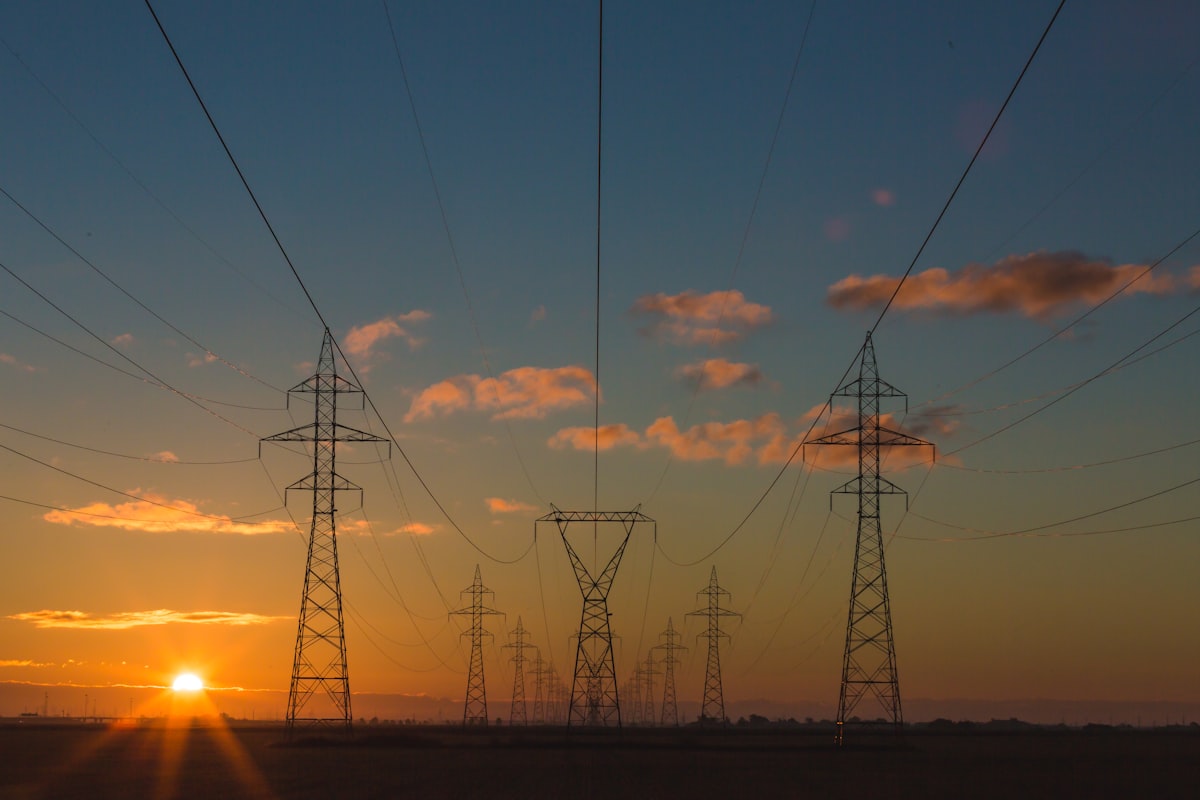
Three times. March 5. March 13. March 21. Each time, the same cascade: a generating unit fails at one of Cuba's aging thermal power plants, the sudden capacity loss overwhelms the grid's stability systems — which have no adequate reserve to absorb the shock — and within minutes, lights go out across an island of 11 million people. Cuba's Electric Union, the state utility, confirmed the March 21 collapse began at the Nuevitas thermoelectric power plant on the north coast of Camagüey province. Approximately 10 million Cubans lost electricity. The island-wide restoration process — which requires manually re-energizing sections of the grid one by one — took more than 12 hours in most areas.
Cuba's government attributed the outage to "equipment failures." This is accurate. It is also a description that could apply to every industrial society on earth — equipment fails everywhere. What distinguishes Cuba's grid from those of its Caribbean neighbors is not that equipment fails. It is that when equipment fails here, the entire national system collapses rather than the failure being contained. Understanding the difference requires examining three problems that have compounded over decades.
The Infrastructure: Soviet Design, 21st Century Demands
The core of Cuba's electricity generation infrastructure is Soviet-era technology. The main thermoelectric plants — at Nuevitas, Santa Cruz del Norte, Renté, Cienfuegos, and other locations across the island — were constructed with Soviet technical and financial assistance during the 1960s, 1970s, and 1980s. They were designed for an operational life of approximately 30-40 years. Many are now operating in their fifth decade of continuous service, well beyond the engineering parameters for which they were designed.
When the Soviet Union collapsed in 1991, the spare parts, technical support documentation, and fuel subsidy arrangements that had sustained these plants vanished simultaneously. Cuba entered the period it calls the "Special Period" — a severe economic contraction that lasted through the 1990s and required emergency rationing of everything including electricity. During this period, maintaining aging Soviet equipment became a matter of creative improvisation rather than proper engineering. Parts were fabricated locally when they could not be imported. Maintenance schedules that required specialized Soviet equipment were modified or skipped. The plants continued operating — but not as they were designed to operate.
The Fuel Problem: A Supply Chain That Was Never Reliable
Cuba's thermoelectric plants run on oil. Cuba does not produce meaningful quantities of oil — the island has some offshore and onshore deposits, primarily in the Havana Basin, but proven reserves are insufficient to power a national grid. Cuba is entirely dependent on oil imports, and securing those imports has become progressively harder through three compounding constraints.
Venezuela's Declining Supply: Beginning in the early 2000s, Venezuela's government supplied Cuba with approximately 100,000 barrels of oil per day at heavily subsidized prices under the Petrocaribe arrangement — oil in exchange for Cuban medical, educational, and technical expertise. At its peak, this represented a subsidy worth several billion dollars annually. Venezuela's own economic collapse from 2015 onward progressively reduced this supply. By 2026, Venezuelan shipments are a fraction of their peak volume and no longer reliable in timing or quantity.
US Sanctions Impact: US sanctions prohibit American companies from supplying oil to Cuba and impose costs on third-country companies that engage in oil trade with Cuba — making alternative sourcing expensive and legally complex. Tanker operators and shipping companies that transport oil to Cuba face secondary sanctions risks. The practical effect is that Cuba pays a significant premium above market price for any oil it can access, and many potential suppliers choose not to engage at all.
The 2026 Oil Price Surge: The Iran war and Strait of Hormuz closure have driven global oil prices up approximately 45% since February 28. Every barrel of oil Cuba can source through its restricted informal channels now costs significantly more in the hard currency that Cuba has increasingly little of. Russia is preparing a fuel shipment to Cuba that may provide temporary relief — but Russian shipments are irregular and have not replaced the consistency of the Venezuelan arrangement.
The Grid Architecture: Why Failures Cascade Instead of Being Contained
A resilient national grid has two properties that Cuba's grid currently lacks. First: reserve generating capacity — extra generation that can rapidly compensate when a unit fails, preventing the system frequency from dropping to the point where other plants automatically trip offline for self-protection. Second: functioning protective systems — automated circuit breakers and monitoring systems that detect an incipient failure and isolate it before it spreads, limiting any outage to the area directly affected rather than allowing it to cascade nationally.
Cuba's grid has neither. Its generating plants run at or near maximum capacity with no meaningful reserve margin — because building reserve requires either additional generating capacity or reduced demand, and Cuba has been unable to invest in either. Its protective systems — part of the same aged Soviet-era infrastructure — are insufficiently maintained and cannot respond fast enough to contain cascade failures. When Nuevitas failed on March 21, the frequency drop spread faster than anything in the system could contain it. The result was total collapse in minutes rather than a localized outage.
Three Case Studies: Countries That Faced Similar Crises
Cuba's crisis is severe — but the pattern of aging infrastructure, fuel dependency, and cascade vulnerability has appeared in other countries, sometimes with instructive outcomes.
Jamaica (1990s-2000s): Jamaica faced a nearly identical configuration in the 1990s — aging oil-fired generation, high fuel import costs, chronic underinvestment, frequent outages. The Jamaican solution involved attracting private investment in new, efficient generating capacity through independent power producer agreements and restructuring the Jamaica Public Service Company. The transformation took approximately 15-20 years but significantly improved reliability. Cuba's economic model prevents the direct application of this approach, but the underlying lesson — aging oil-fired generation requires replacement — is system-independent.
Puerto Rico (Hurricane Maria, 2017): Hurricane Maria destroyed approximately 80% of Puerto Rico's generation and transmission infrastructure in September 2017. The collapse created conditions similar to Cuba's chronic crisis — but concentrated into a sudden shock. Recovery took far longer than anticipated, cost far more than projected, and revealed deep structural vulnerabilities. Puerto Rico has since invested substantially in distributed solar generation and battery storage — a model directly applicable to Cuba's geography and solar resource. The financing mechanism Puerto Rico used (US federal disaster recovery funds) is unavailable to Cuba, but the technical path is instructive.
Venezuela (2019 National Blackout): In March 2019, Venezuela experienced a nationwide blackout lasting more than a week in some areas — caused by a combination of infrastructure decay at a major hydroelectric facility, years of underinvestment, and a grid management system too degraded to contain the cascade. Venezuela's power sector has not fully recovered as of 2026. The Venezuela comparison suggests a sobering trajectory: once infrastructure reaches Cuba's current deterioration level, recovery without sustained massive investment is extremely difficult. Cuba and Venezuela share not only their energy crisis characteristics but also the political economy that created them.
What a Real Solution Costs
Independent energy economists who have analyzed Cuba's grid estimate that a comprehensive infrastructure renewal — replacing the most critically degraded generating plants, modernizing the transmission system, upgrading grid management and protection systems — would cost between $4 billion and $8 billion. For context: Cuba's total GDP is approximately $100 billion at purchasing power parity. An $8 billion infrastructure investment represents approximately 8% of annual GDP — a massive capital expenditure by any measure, and one that would require either significant external financing or a fundamental restructuring of how Cuba's economy mobilizes investment.
The renewable energy path offers a more achievable entry point. Cuba has among the best solar resources in the Caribbean — consistent year-round sunshine across an island with extensive flat land suitable for solar installations. Distributed solar generation combined with battery storage could reduce dependence on the centralized grid that keeps failing, because distributed systems continue operating island by island even when the main grid is down. Cuba has a stated goal of 24% renewable electricity by 2030 and has completed some solar projects. But current investment levels fall far short of what would meaningfully reduce grid vulnerability within the next several years.
📊 NCD Analysis: The Grid Is a Mirror
Cuba's power grid is a mirror of the broader structural conditions that have defined the island's economic life for decades. The infrastructure deterioration reflects the inability to generate sufficient investment under current political and economic arrangements. The fuel dependency reflects the failure to develop domestic energy resources or secure reliable international supply. The cascade failure pattern reflects the maintenance deficit that results when a government prioritizes current consumption over infrastructure upkeep. None of these conditions can be addressed by technical fixes alone — they require political and economic choices that have consistently been deferred. Three grid collapses in one month is not a maintenance problem. It is the power infrastructure announcing, in the most visible way available to infrastructure, that the deferral can no longer continue.
📌 Key Facts
- 3 collapses — March 5, March 13, March 21, 2026
- ~10 million — Cubans without power during the March 21 collapse
- Nuevitas — Thermoelectric plant whose failure triggered the March 21 cascade
- 50+ years — Age of Cuba's oldest generating plants, beyond their design life
- 1991 — Year Soviet collapse ended Cuba's energy subsidy
- ~100,000 bbl/day — Venezuela's peak oil supply to Cuba; now severely reduced
- $4–8 billion — Estimated cost of comprehensive Cuban grid renewal
- 24% — Cuba's stated renewable energy target for 2030
- 80% — Puerto Rico's grid destroyed by Hurricane Maria — comparable recovery challenge
❓ Frequently Asked Questions
Q: Why does one generator failure knock out power across the whole country?
Resilient grids have reserve generating capacity — extra generation that absorbs the sudden loss of one unit and prevents system frequency from dropping. Cuba's plants operate at or near maximum with no reserve. When Nuevitas failed, there was nothing to absorb the capacity loss. The resulting frequency drop spread faster than Cuba's aged protection systems could isolate it, causing remaining plants to automatically trip offline to protect their own equipment. Total collapse followed in minutes. A grid with adequate reserves can lose a unit without any consumer noticing. Cuba's cannot.
Q: What happens to hospitals during Cuba's blackouts?
Cuban hospitals maintain backup diesel generators but face the same fuel shortage affecting the main grid. During extended outages, hospitals prioritize operating rooms, ICUs, and neonatal wards. Water distribution is also affected — Cuba's water system depends on electric pumps, and prolonged outages can affect potable water access in pump-dependent areas. The combination of no electricity, no cooling, and reduced water supply in a tropical climate creates a health emergency compounded on top of the infrastructure emergency.
Q: Could solar power solve Cuba's electricity problem?
Solar is a viable long-term solution for Cuba — the island has excellent solar resources and a geography well-suited to distributed generation. The challenge is financing the transition at speed and scale. Distributed solar with battery storage would be transformative precisely because it reduces dependence on the centralized grid that keeps failing. But the panels, inverters, and batteries must be imported, paid for in hard currency that Cuba has limited access to, through supply chains complicated by sanctions. Cuba has begun the transition — but at a pace far slower than the urgency of the crisis demands.
Q: Could lifting US sanctions fix Cuba's power crisis?
Sanctions removal would help significantly but would not automatically solve the crisis. Without sanctions, Cuba could access US financing mechanisms, technology suppliers, and oil markets at normal prices — reducing the cost premium it currently pays for everything. Private energy investment would become viable. However, the fundamental infrastructure investment required ($4-8 billion) would still need to be mobilized from somewhere, and the political economy questions about how Cuba manages private investment in critical infrastructure would remain. Sanctions removal is a necessary but not sufficient condition for solving the power crisis.
⚡ NCD Bottom Line: Cuba's third blackout in March is not a story about a power plant failure. It is a story about what happens when 35 years of underinvestment, political constraints, sanctions, and eliminated subsidies converge on infrastructure that has operated far past its design life. The lights will come back on — they always do. What will not automatically improve is the structural condition that makes the next outage inevitable. Addressing that condition requires political and economic decisions that have been deferred for decades. Three collapses in a single month is the infrastructure announcing that the deferral has a limit.
Sources: NPR — Cuba Power Grid Collapse March 2026 · AP News — Cuba Coverage · Wikipedia — Electric Power in Cuba
Energy, economy, and global affairs. NowCastDaily.com